
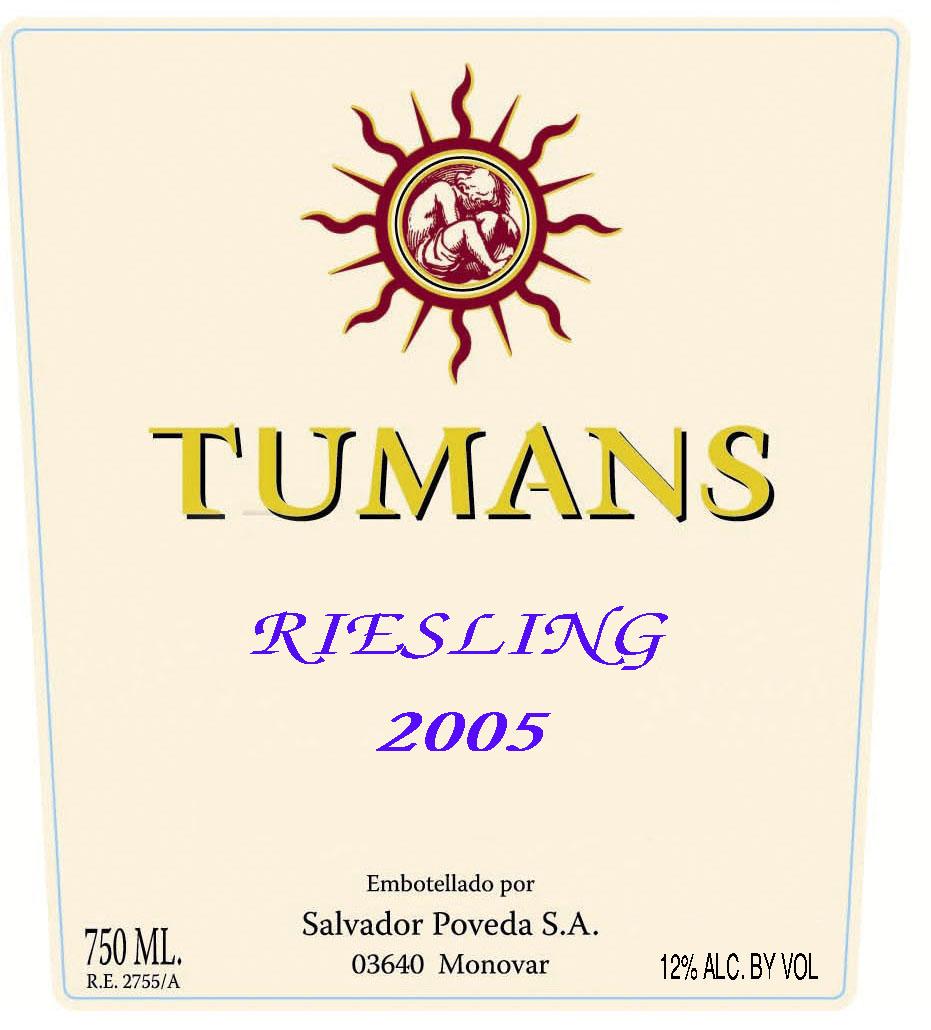
2005 Alicante Riesling
Tumans White Wine, a delightful Riesling from the picturesque Alicante region, showcases the unique charm of this renowned Spanish wine-growing area. With its vibrant and luminous pale yellow color, this vintage 2005 offering immediately catches the eye. On the nose, it reveals an enticing bouquet of stone fruit, floral notes, and hints of citrus that promises a refreshing experience. The palate is beautifully balanced, displaying a medium body that is both smooth and approachable, complemented by a crisp acidity that enhances its overall vivacity. The fruit intensity is prominent, with flavors reminiscent of ripe peaches and zesty lemons, creating a mouthwatering sensation. As for the dryness, this wine leans towards the off-dry side, providing a delightful sweetness that is well-integrated and harmonizes with the wine's vibrant character. Tumans White Wine is an elegant choice for those seeking a refreshing, food-friendly companion for a sunny day or a light seafood meal.
Tumans White Wine, a delightful Riesling from the picturesque Alicante region, showcases the unique charm of this renowned Spanish wine-growing area. With its vibrant and luminous pale yellow color, this vintage 2005 offering immediately catches the eye. On the nose, it reveals an enticing bouquet of stone fruit, floral notes, and hints of citrus that promises a refreshing experience. The palate is beautifully balanced, displaying a medium body that is both smooth and approachable, complemented by a crisp acidity that enhances its overall vivacity. The fruit intensity is prominent, with flavors reminiscent of ripe peaches and zesty lemons, creating a mouthwatering sensation. As for the dryness, this wine leans towards the off-dry side, providing a delightful sweetness that is well-integrated and harmonizes with the wine's vibrant character. Tumans White Wine is an elegant choice for those seeking a refreshing, food-friendly companion for a sunny day or a light seafood meal.


