
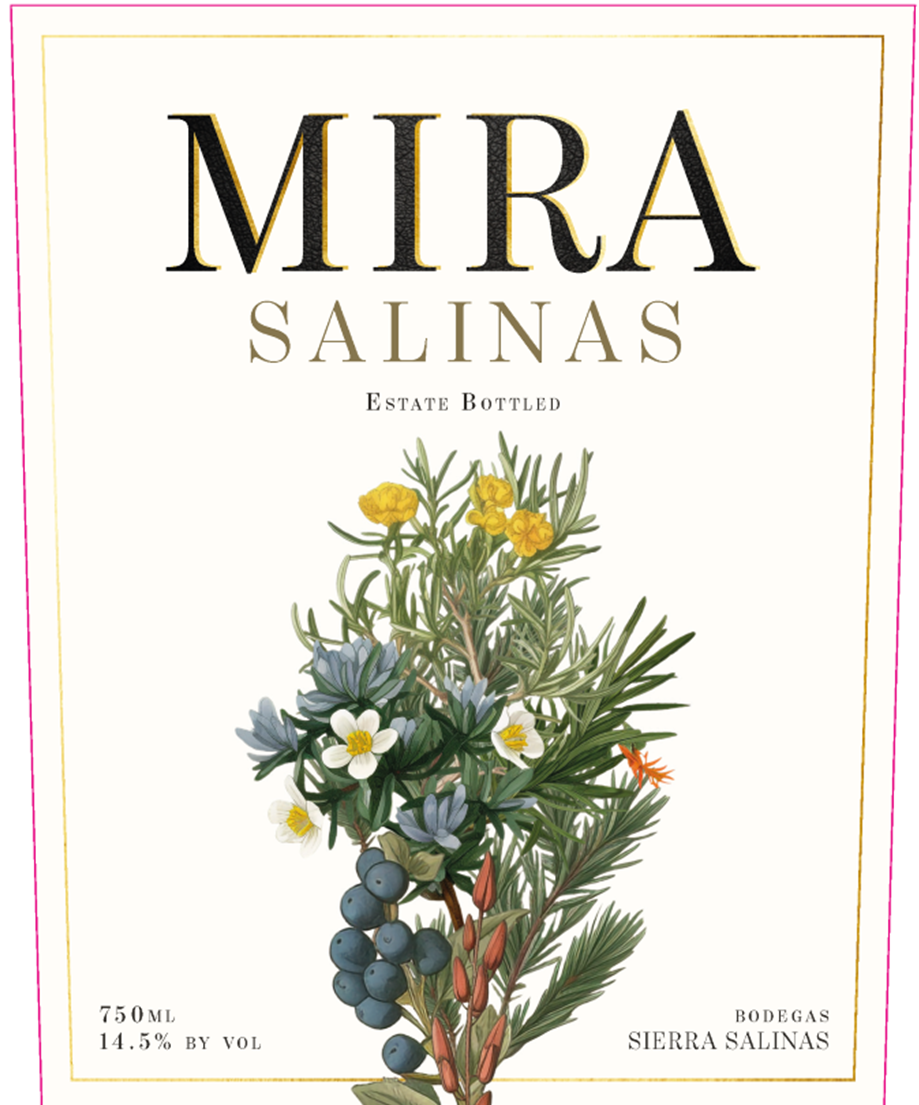
2019 Alicante Mourvedre
The 2019 Sierra Salinas Mira Salinas, crafted from the Mourvèdre varietal, showcases a delightful red hue that entices the eye. This wine embodies a full-bodied character, offering a robust mouthfeel that envelops the palate. Its acidity is pronounced, lending a bright and lively freshness that balances the richness. The tannins are firm and structured, providing a solid backbone that supports the wine's complex flavor profile. Expect a prominent fruit intensity, with notes of dark berries and subtle earthy undertones that deepen the experience. This wine is beautifully dry, enhancing its approachability and making it an excellent companion for hearty dishes or a cozy evening by the fire. The Alicante region's unique terroir shines through, adding an extra layer of richness to this exceptional Mourvèdre.
The 2019 Sierra Salinas Mira Salinas, crafted from the Mourvèdre varietal, showcases a delightful red hue that entices the eye. This wine embodies a full-bodied character, offering a robust mouthfeel that envelops the palate. Its acidity is pronounced, lending a bright and lively freshness that balances the richness. The tannins are firm and structured, providing a solid backbone that supports the wine's complex flavor profile. Expect a prominent fruit intensity, with notes of dark berries and subtle earthy undertones that deepen the experience. This wine is beautifully dry, enhancing its approachability and making it an excellent companion for hearty dishes or a cozy evening by the fire. The Alicante region's unique terroir shines through, adding an extra layer of richness to this exceptional Mourvèdre.


