
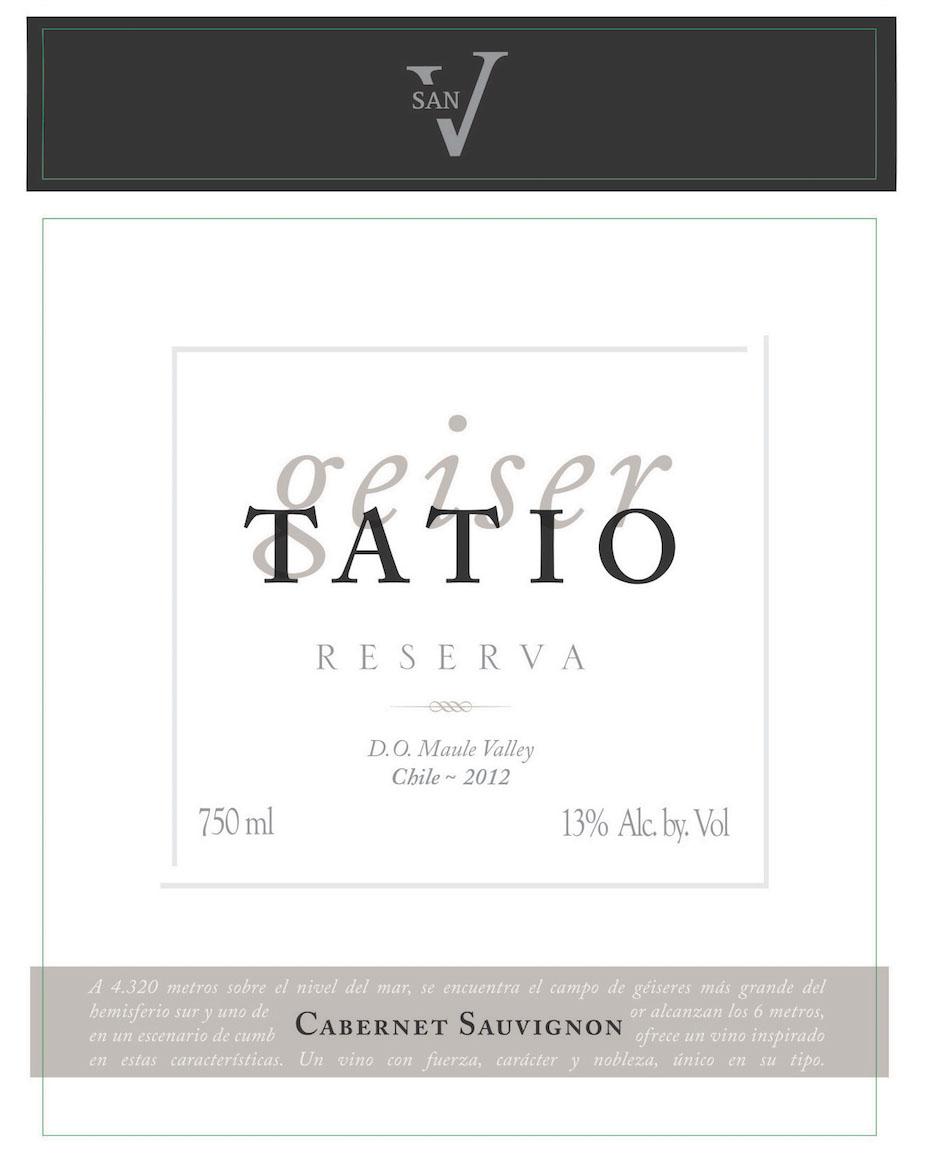
2012 Maule Valley Cabernet Sauvignon
The Geiser Tatio Sei A, a captivating Cabernet Sauvignon from the esteemed Maule Valley, showcases a deep red hue that hints at its robust character. This vintage from 2012 is skillfully crafted, exhibiting a full-bodied structure accompanied by high acidity, which adds a lively and mouthwatering quality to the wine. The fruit intensity is prominently expressive, with notes of dark fruits like blackcurrant and plum intertwining with subtle undertones of oak and spice. The tannins are notable and well-integrated, providing a firm backbone that enhances the wine's complexity. It leans towards a dry style, making it a wonderful companion for savory dishes or enjoyed on its own, showcasing the classic elegance of a Chilean Cabernet Sauvignon.
The Geiser Tatio Sei A, a captivating Cabernet Sauvignon from the esteemed Maule Valley, showcases a deep red hue that hints at its robust character. This vintage from 2012 is skillfully crafted, exhibiting a full-bodied structure accompanied by high acidity, which adds a lively and mouthwatering quality to the wine. The fruit intensity is prominently expressive, with notes of dark fruits like blackcurrant and plum intertwining with subtle undertones of oak and spice. The tannins are notable and well-integrated, providing a firm backbone that enhances the wine's complexity. It leans towards a dry style, making it a wonderful companion for savory dishes or enjoyed on its own, showcasing the classic elegance of a Chilean Cabernet Sauvignon.


