
2003 Barolo Red Blend
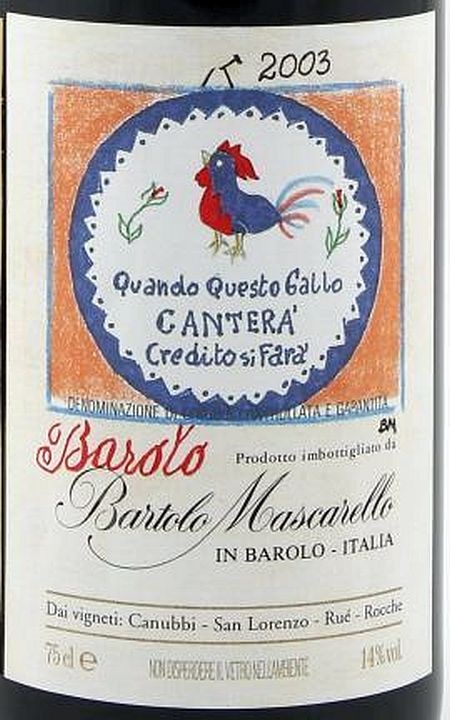
Bartolo Mascarello Quando Questo Gallo Canterà Credito si Farà is a remarkable red blend from the esteemed Barolo region, showcasing the depth and complexity of the 2003 vintage. This wine presents a deep red hue that invites you to explore its intriguing aromas. On the palate, it boasts a medium body that is well-structured, revealing a delightful interplay of fruit and earthy notes. The acidity is bright, contributing to a refreshing finish that keeps you coming back for more. With notable tannins that are firm yet smooth, this wine elegantly balances its richness with a dry sensation, highlighting the essence of Barolo. It's a wine that not only captures the heart but also reflects the passion and dedication put into its creation.
Bartolo Mascarello Quando Questo Gallo Canterà Credito si Farà is a remarkable red blend from the esteemed Barolo region, showcasing the depth and complexity of the 2003 vintage. This wine presents a deep red hue that invites you to explore its intriguing aromas. On the palate, it boasts a medium body that is well-structured, revealing a delightful interplay of fruit and earthy notes. The acidity is bright, contributing to a refreshing finish that keeps you coming back for more. With notable tannins that are firm yet smooth, this wine elegantly balances its richness with a dry sensation, highlighting the essence of Barolo. It's a wine that not only captures the heart but also reflects the passion and dedication put into its creation.


