
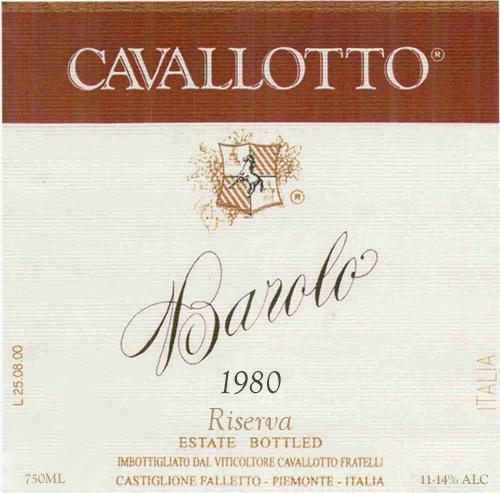
1980 Barolo Nebbiolo
The Cavallotto Barolo Riserva, a remarkable vintage from 1980, showcases the elegance and depth that Nebbiolo is renowned for. This full-bodied red wine exhibits a captivating deep ruby color, hinting at its maturity and complexity. The acidity is pronounced, offering a vibrant backbone that enhances its structure and provides a refreshing lift. The fruit intensity is prominent, revealing layers of dark cherry, plum, and subtle floral notes, alongside intriguing undertones of dried herbs and leather. Tannins are notably firm, creating a robust framework that supports its rich flavors while ensuring a graceful aging potential. As a dry wine, it pairs beautifully with hearty dishes, making it an excellent choice for a special occasion or a cozy night in, embodying the artistry of Barolo's stunning terroir.
The Cavallotto Barolo Riserva, a remarkable vintage from 1980, showcases the elegance and depth that Nebbiolo is renowned for. This full-bodied red wine exhibits a captivating deep ruby color, hinting at its maturity and complexity. The acidity is pronounced, offering a vibrant backbone that enhances its structure and provides a refreshing lift. The fruit intensity is prominent, revealing layers of dark cherry, plum, and subtle floral notes, alongside intriguing undertones of dried herbs and leather. Tannins are notably firm, creating a robust framework that supports its rich flavors while ensuring a graceful aging potential. As a dry wine, it pairs beautifully with hearty dishes, making it an excellent choice for a special occasion or a cozy night in, embodying the artistry of Barolo's stunning terroir.


