
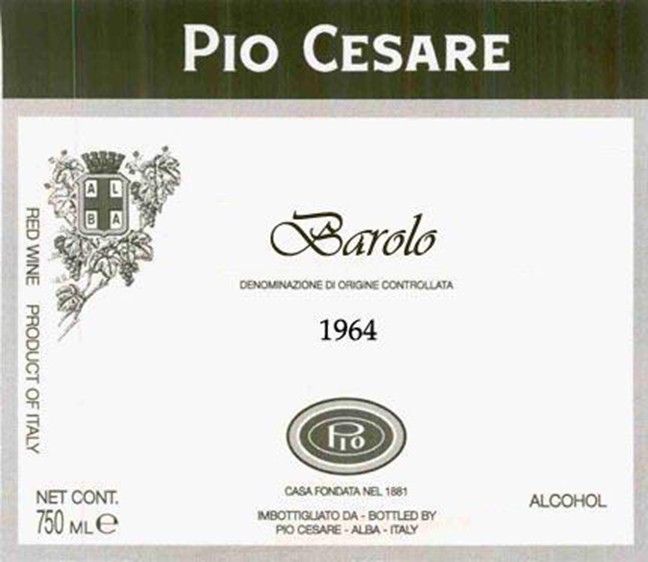
1964 Barolo Red Blend
Pio Cesare Barolo from the renowned Barolo region represents a remarkable expression of Italian winemaking, offering a sublime balance of heritage and craftsmanship. This enchanting red blend showcases a deep ruby color, hinting at the richness within. The wine delivers a full-bodied mouthfeel, accompanied by a high acidity that invigorates the palate, enhancing its complexity. The fruit intensity shines brightly, with prominent notes of dark cherry and plum, beautifully complemented by subtle earthy undertones and delicate floral hints. Tannins are well-structured, providing a firm backbone that promises longevity and grace, while the wine remains bone-dry, allowing the exquisite flavors to unfold with every sip. A true testament to the exceptional 1964 vintage, this Barolo invites you to savor its storied past and cherish its undeniable elegance.
Pio Cesare Barolo from the renowned Barolo region represents a remarkable expression of Italian winemaking, offering a sublime balance of heritage and craftsmanship. This enchanting red blend showcases a deep ruby color, hinting at the richness within. The wine delivers a full-bodied mouthfeel, accompanied by a high acidity that invigorates the palate, enhancing its complexity. The fruit intensity shines brightly, with prominent notes of dark cherry and plum, beautifully complemented by subtle earthy undertones and delicate floral hints. Tannins are well-structured, providing a firm backbone that promises longevity and grace, while the wine remains bone-dry, allowing the exquisite flavors to unfold with every sip. A true testament to the exceptional 1964 vintage, this Barolo invites you to savor its storied past and cherish its undeniable elegance.


